
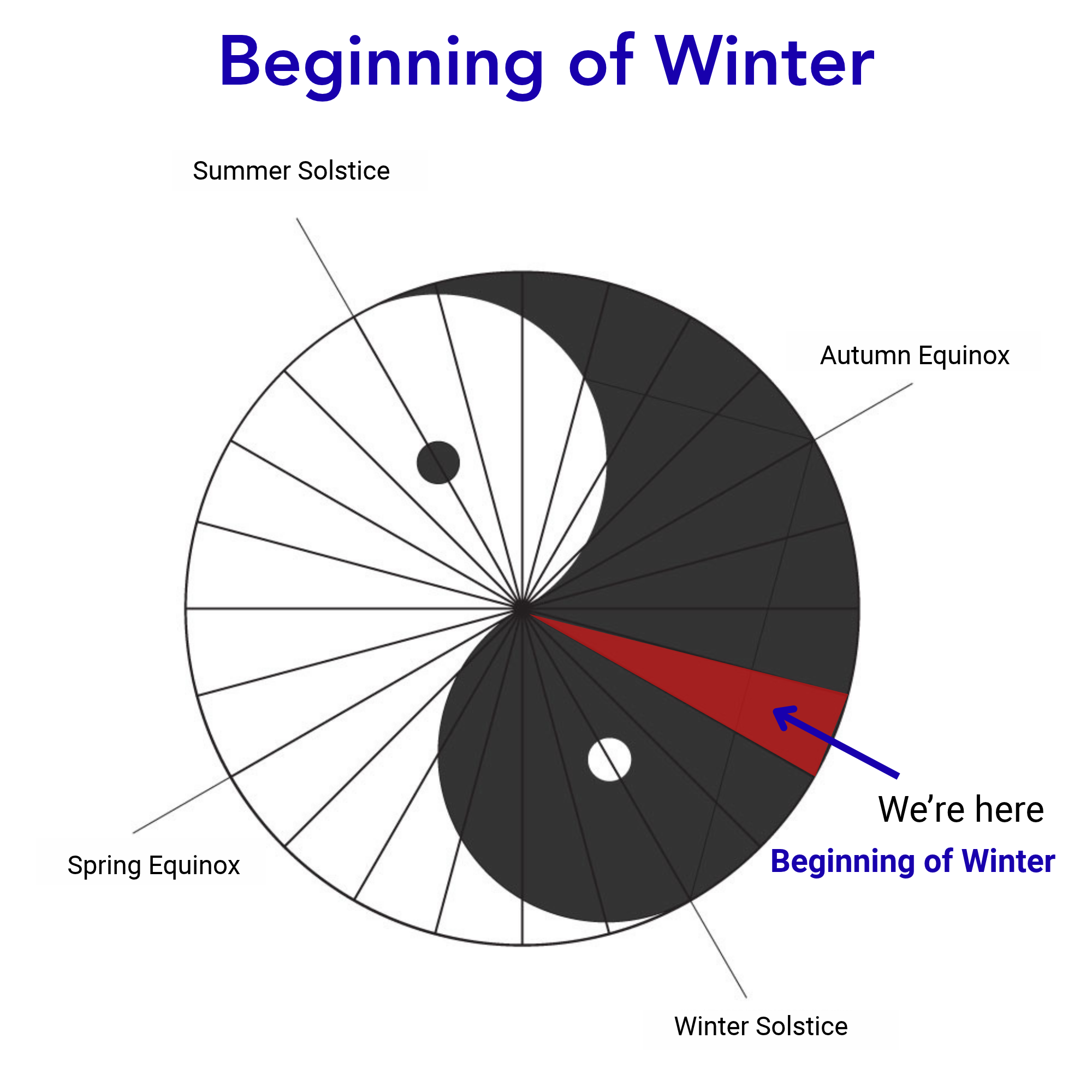
November 7, 2026 marks Beginning of Winter, the 19th of the 24 Solar Terms and the first of winter. At this point, the Sun reaches 225° ecliptic longitude.
Beginning of Winter is one of eight major turning points in the Chinese solar calendar. These are the beginnings of the four seasons, the two equinoxes and the two solstices.
In the West, we usually think of the winter solstice as the start of winter. In the 24 Solar Terms, that marks the midpoint. Nature doesn’t change seasons overnight. The shift begins long before we notice the familiar signs. Even as trees show their autumn colors, they’re already preparing. They pull nutrients from their leaves and store them in their roots and branches, enough to carry them through winter and fuel new growth in spring.
What’s happening in nature
Daylight continues to decrease as we head toward the winter solstice.
Many trees have shed their leaves, but tiny buds have formed for next spring.
The white-tailed deer rut is at its peak.
Psycho-emotional shifts
We can learn something from the way trees prepare for winter. We often focus on what’s visible in our lives, like our accomplishments and progress. But equally important are the roots that sustain us: our health, our relationships and the things that keep us grounded and strong.
Winter invites us to nourish those roots and replenish our reserves. It’s a chance to restore our strength and appreciate the value of rest.
It’s also a good time to look back on the year. How often do we finish one thing only to immediately focus on what’s next? There’s value in pausing to appreciate what we’ve accomplished, the challenges we’ve overcome, the relationships we’ve strengthened and all that we’ve learned along the way. We can let ourselves feel satisfied with the effort we’ve made and how much we’ve grown.
Recognizing how much we’ve done can also help us become more thoughtful about where we direct our energy. Conserving energy isn’t only about getting more rest. It can also mean fewer unnecessary commitments, fewer demands on ourselves and more time for the things that truly matter.
The Huangdi Neijing, an ancient Chinese medical text, encourages us to approach winter with a sense of contentment, as though we already have everything we need.
Seasonal self-care
Beginning of Winter is a time to prepare for the colder months, even if the weather isn’t cold yet.
Prepare your living space. As we begin spending more time indoors, consider how you might make your home feel warm, comforting and restorative. Clear a little clutter, gather what you’ll need and create a comfortable space where you can relax and feel at ease. A welcoming environment is another way to nourish ourselves.
Plan something to look forward to. Is there a book you’ve been meaning to read, a hobby to enjoy or a project to start? Winter offers time for things we may put aside during warmer weather. Some of my plans are to make homemade bone broths, grow broccoli sprouts and work on some projects.
Practice Tai Chi and Qi Gong. These practices teach us to move with less effort and greater awareness, cultivating calm while keeping the body active and healthy. Even a few minutes a day can help you feel more grounded as the season turns.
Soak your feet. A warm foot bath at night relaxes the body and warms us from the inside out. In traditional Chinese medicine, an acupuncture point called Kidney 1 sits on the sole of the foot, and soaking the feet is thought to draw warmth upward through the whole body. It’s a valued Yang Sheng practice, part of the Chinese tradition of nourishing life. A light sweat is considered a sign that the warmth has reached all the way through.
Make room for more rest. Traditional Chinese medicine encourages going to bed earlier and rising later during winter, ideally after sunrise. Just as our bodies need sleep after a busy day, we also need periods of rest throughout the year. Summer’s long days invite less sleep and more activity, but we can’t maintain that pace year-round.
Beginning of Winter is a transition, not a sudden change. We can gradually adjust our habits according to the weather, our energy levels and what our bodies need.
Eating with the season
In China, Beginning of Winter is traditionally welcomed with special meals. It’s part of a tradition called bǔ dōng, or winter nourishment, a time to replenish strength after the growing and harvesting seasons.
In Chinese dietary therapy, long, slow cooking is considered more warming than quick cooking. This is a good time to bring out the slow cooker for soups, stews and homemade broths.
Fennel greens and seeds are valued for their warming qualities and their association with digestion and Kidney Yang, the body’s deep source of warmth in Chinese medicine. Add fresh fennel greens to soups or sprinkle a little ground fennel seed into stews or roasted vegetables.
Other good foods to add now: pumpkin, winter squash, peanuts, walnuts, chestnuts and cinnamon.
Closing reflection
Every season has its own purpose. Periods of rest, reflection and renewal are just as important as times of growth. Like the trees, we can let go of what’s finished and turn our attention to our roots. The buds for next spring are already there.
Next Solar Term: Slight Snow, November 22, 2026.